If you’re thinking about your first tattoo, one question is probably louder than all the others: how much is this going to hurt?
Here’s the honest answer, with no sugar-coating and no scare stories. Yes, getting a tattoo hurts — but almost certainly less than you’re imagining, and in a way that’s far more manageable than the horror stories suggest. Most people walk out saying, “That was nowhere near as bad as I expected.”
At Inkredible Tattoo Studio in Sheffield, we’ve sat with thousands of first-timers, and we’d rather you know exactly what to expect than spend weeks worrying about the unknown. So let’s break down what tattoo pain actually feels like, which areas hurt the most, and how to make the whole experience easier.
What does tattoo pain actually feel like?
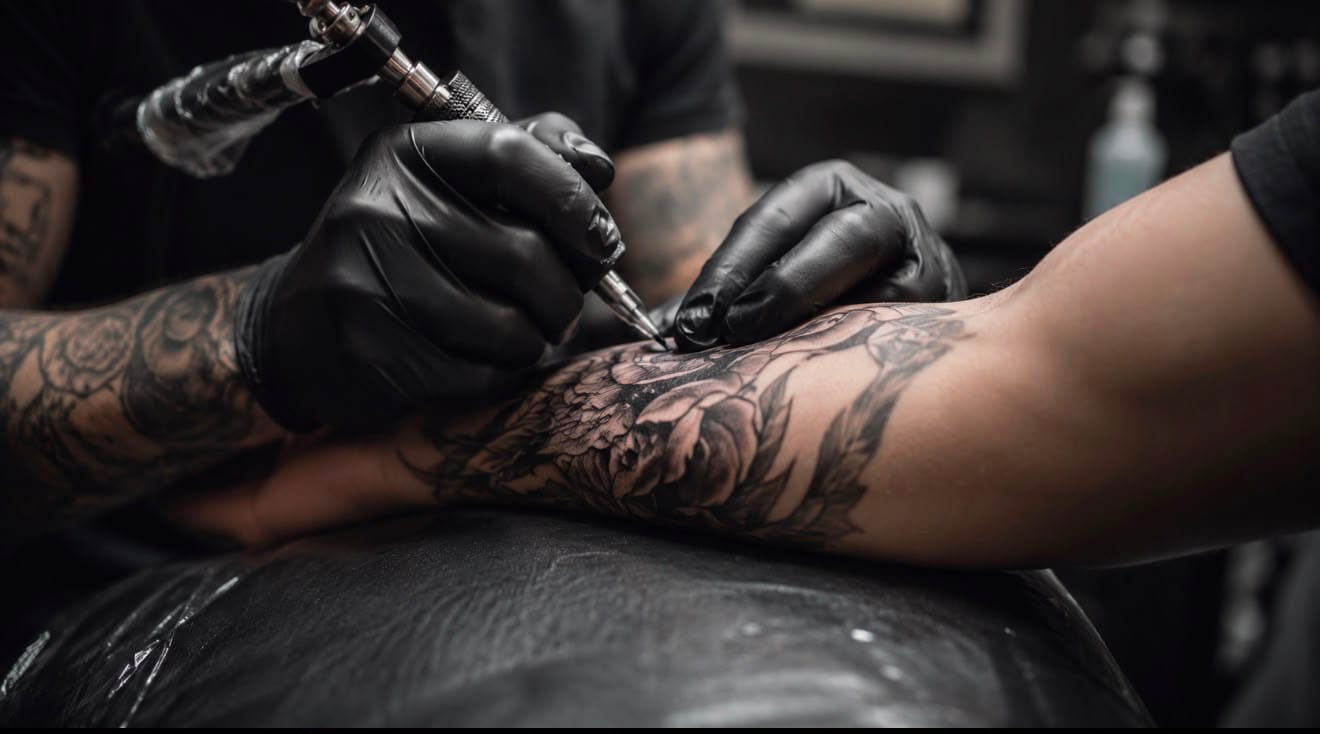
Forget the idea of one constant, stabbing pain. A tattoo needle isn’t a single point being dragged through your skin — it’s a cluster of fine needles moving extremely fast, depositing ink just below the surface.
Most people describe the sensation in one of these ways:
- A hot scratching feeling, like a cat’s claw dragged slowly across sunburn
- A vibrating or buzzing sensation, especially over bone
- A stinging “scribble” that fades into background discomfort once you settle in
There are also two distinct stages. Outlining (the line work) tends to feel sharper and more precise. Shading and colour packing feels more like a dull, warm scratch — many people actually find it more relaxing than the lines. The first few minutes are usually the worst; after that, your body adjusts and the sensation becomes easier to tune out.
The honest answer: how bad is it really?
On a scale most clients use, a typical tattoo on a forearm or outer arm sits somewhere around a 3 or 4 out of 10 — uncomfortable, but easy to talk and breathe through. Bonier, more sensitive areas can climb higher, but even then it’s rarely the unbearable agony people fear.
The single biggest factor isn’t the needle — it’s placement. Where you put the tattoo matters far more than its size or detail.
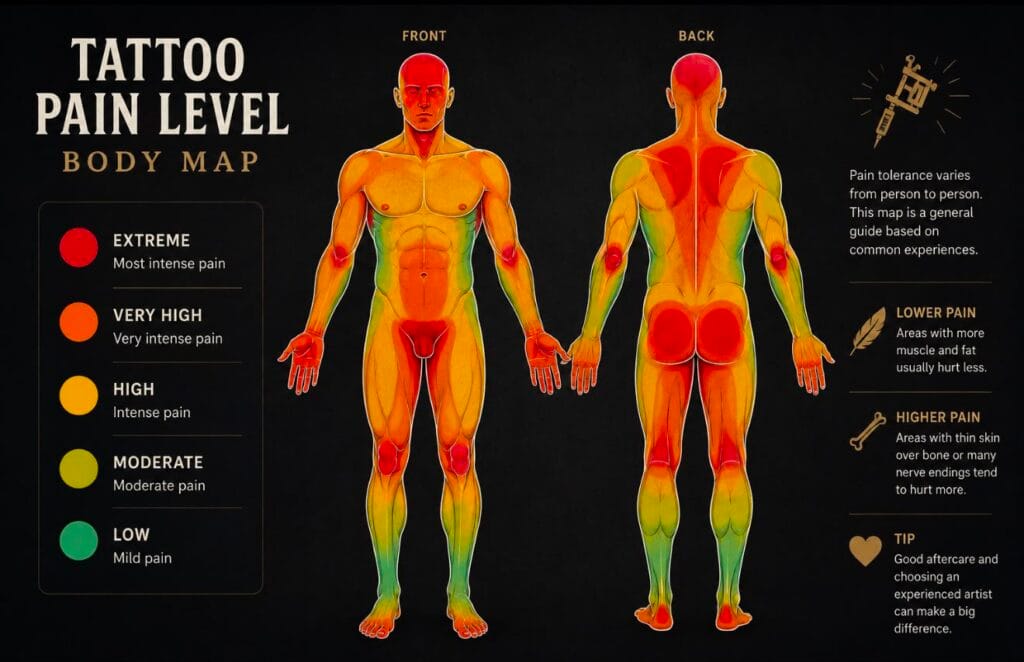
Tattoo pain chart: most to least painful areas
Pain is personal, but after years of working on every body part imaginable, clear patterns emerge. Here’s a realistic guide.
Least painful (great for a first tattoo)
- Outer upper arm
- Forearm
- Outer thigh
- Calf
- Upper back and shoulders
These areas have more muscle and fat padding the bone and fewer concentrated nerve endings. If it’s your first piece and you’re nervous, starting here is a smart move.
Moderately painful
- Stomach
- Chest (varies a lot from person to person)
- Lower back
- Neck
- Upper arm (inner side starts to climb)
Most painful (best left for when you know what to expect)
- Ribs and sternum
- Spine
- Ankles and the tops of the feet
- Inner bicep and the elbow ditch
- Behind the knee
- Hands and fingers
- Armpit and groin
- Head and face
The pattern is simple: pain spikes wherever skin is thin, bone is close to the surface, or nerve endings are dense. None of these areas are “off limits” — plenty of people get ribs and feet done — but it helps to walk in prepared rather than surprised.
What affects how much a tattoo hurts
Two people can get the same design in the same spot and have completely different experiences. These are the main reasons why:
- Placement — the number one factor, as above.
- Duration — pain is rarely intense, but a six-hour session wears you down through fatigue, not sharpness.
- Your own pain tolerance — genuinely varies from person to person, and that’s normal.
- Sleep, food and hydration — turning up tired, hungry or dehydrated makes everything feel worse.
- The artist’s technique — a skilled, confident hand works cleaner and faster, which means less trauma to the skin and a smoother experience.
- Where you are in the day — many people find they cope better earlier on, before the day’s tiredness sets in.
How to reduce tattoo pain: before, during and after
You have more control over this than you think.
Before your appointment
- Get a proper night’s sleep.
- Eat a solid meal an hour or two before — low blood sugar makes pain and lightheadedness much worse.
- Drink plenty of water in the days leading up.
- Avoid alcohol the night before and on the day. It thins the blood, increases bleeding, and can affect how the ink takes.
- Skip blood-thinning painkillers like aspirin. If you need something, paracetamol is the gentler option — but check with your artist first.
- Moisturise the area in the days beforehand; healthy, hydrated skin takes ink more easily.
During the session
- Breathe slowly and steadily — holding your breath makes you tense, and tension amplifies pain.
- Eat something sugary if you start to feel faint.
- Don’t be a hero. Ask for a short break if you need one; a five-minute breather can completely reset your tolerance.
- Bring a distraction — headphones, a podcast, or just a chat with your artist.
After
- Follow your aftercare instructions properly. Most of the discomfort people complain about happens during healing, not the tattoo itself — and good aftercare keeps it to a minimum.
Numbing creams: do they actually work?
Numbing creams are a fair question, and the honest answer is: it depends. They can genuinely take the edge off, especially for very sensitive areas or long sessions. But they’re not a magic fix — many only work on the surface, can wear off mid-session, and some can subtly change how the skin behaves and takes ink.
If you’re considering one, talk to your artist before your appointment rather than turning up having already applied something. We’d rather guide you to the right product and method than work around a surprise. Never apply anything to broken skin.
Will the second session hurt more?
For larger pieces done over multiple sessions, people often ask whether it gets worse. Generally, returning to an area that’s already healed feels similar to the first time. What changes is your mindset — by the second session you know exactly what to expect, which usually makes it noticeably easier to handle.
Quick myth-busting
- “It hurts the whole time.” No — the first few minutes are the worst, then your body adapts.
- “Bigger tattoos hurt more per minute.” Not really. Bigger tattoos take longer, so it’s about endurance, not intensity.
- “You can’t get sensitive areas done.” You can. Plenty of people do. You just go in informed.
- “Drinking beforehand calms the nerves.” It does the opposite for your skin and your tattoo. Skip it.
Frequently asked questions
Does a small tattoo hurt?
Less, simply because it’s over quickly. A tiny piece on the forearm can be done before the discomfort really registers.
What’s the most painful place to get a tattoo?
For most people it’s the ribs, sternum, spine, ankles or behind the knee — anywhere thin skin sits over bone.
Can I take painkillers before a tattoo?
Avoid aspirin and ibuprofen, which thin the blood. Paracetamol is gentler, but always check with your artist first.
How long does the pain last after a tattoo?
The fresh tattoo can feel sore, like a sunburn, for a couple of days. Proper aftercare keeps this minimal — and we’ll cover healing in detail in a dedicated guide.
Nervous about your first tattoo? Let’s talk.
The fear of the unknown is almost always worse than the tattoo itself. At Inkredible Tattoo Studio in Sheffield, we take the time to talk first-timers through every step, choose a comfortable placement for your first piece, and keep the experience as relaxed as possible.
If you’ve been putting off a tattoo because you’re worried about the pain, book a free consultation with us. We’ll answer every question honestly — and you’ll probably leave wondering what you were ever nervous about.