You’ve done the hard part — found the right artist, sat through the session, and walked out with a piece of art on your skin. But here’s something a lot of people don’t realise until it’s too late: how your tattoo looks in five years depends just as much on you as it does on your artist.
A great tattoo is a partnership. Your artist did their half in the chair. The other half happens over the next few weeks, in how you look after it while it heals. Get the aftercare right and your tattoo stays crisp, bold and vibrant. Get it wrong and you risk fading, patchy ink, scarring or, in the worst case, infection.
At Inkredible Tattoo Studio in Sheffield, we send every client home with clear aftercare instructions — but this is the full version, including exactly what to expect at each stage of healing. Bookmark it.
Why aftercare matters
A fresh tattoo is, in simple terms, an open wound. Thousands of tiny needle punctures have placed ink into the second layer of your skin, and your body now treats the area as something to repair and protect. Everything you do over the next two to four weeks either helps that process or interferes with it.
The goal of aftercare is simple: keep the area clean, keep it lightly moisturised, and leave it alone while your skin does its job.
The first few hours: your wrapping
When you leave the studio, your tattoo will be covered. There are two common methods, and your artist will tell you which one they’ve used:
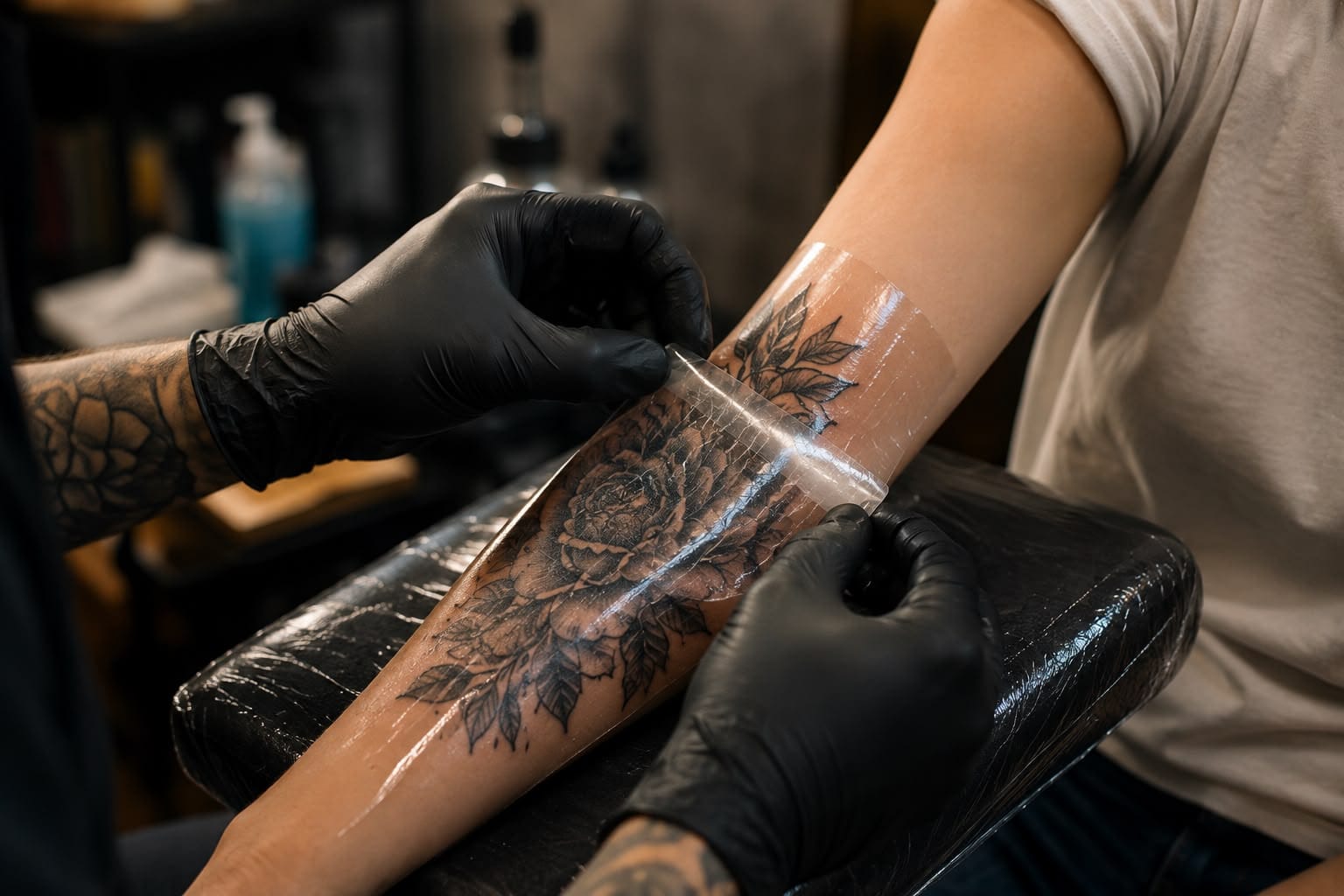
- Traditional cling film or a basic bandage. Keep this on for the time your artist recommends — usually a few hours. It protects the fresh wound from bacteria and rubbing on the way home.
- A “second skin” adhesive film (such as the Saniderm or Dermalize type dressings). These breathable, waterproof films stay on for several days and can make early healing easier and cleaner. Your artist will tell you exactly when and how to remove it. Don’t panic at the fluid that builds up underneath — that’s normal.
Whatever you’ve been given, follow your artist’s timing rather than guessing. If you’re ever unsure, message the studio.
The first wash
Once you remove the initial wrap:
- Wash your hands thoroughly first.
- Gently clean the tattoo with lukewarm water and a fragrance-free, antibacterial soap. Use your fingertips, never a cloth or sponge.
- Don’t scrub. Lightly remove any plasma, blood or excess ink.
- Pat dry with a clean paper towel — never rub, and avoid shared bath towels, which harbour bacteria.
- Let the skin air-dry for a few minutes, then apply a thin layer of your recommended aftercare product.
Tattoo healing stages: what to expect day by day
Knowing what’s normal stops you panicking — and stops you interfering when you shouldn’t.
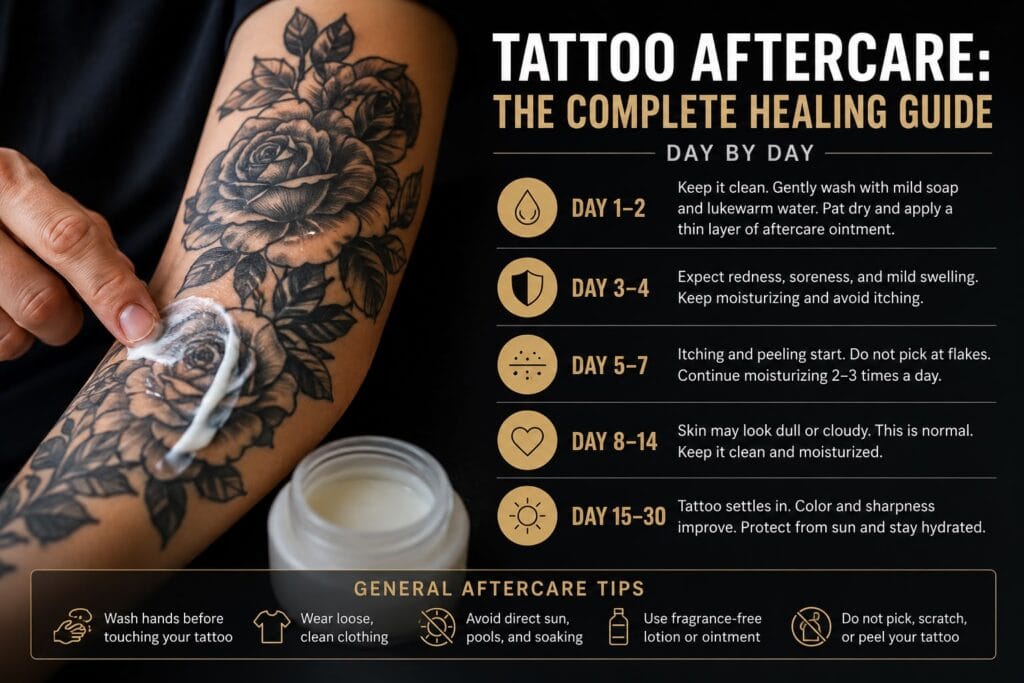
Days 1–3: the fresh wound stage
Expect redness, warmth, mild swelling and some soreness, a bit like sunburn. The tattoo may “weep” a clear or slightly inky fluid (plasma). This is completely normal. Wash gently once or twice a day and apply a thin layer of moisturiser.
Days 4–6: tightening and scabbing
The surface starts to dry and tighten. Light scabbing and flaking begin to form. The tattoo may look duller — don’t worry, this is temporary. Do not pick at anything.
Days 7–14: peeling and itching
This is the stage that tests everyone. The skin peels like a healing sunburn, and the itching can be intense. You may see flakes of coloured skin coming away — that’s dead skin, not your tattoo disappearing. Do not scratch, pick or peel. If it itches, a gentle pat or a light layer of moisturiser is your friend. Picking a scab off early is the number one cause of patchy, faded ink.
Weeks 2–4: the cloudy stage
Once the peeling finishes, your tattoo may look slightly dull, shiny or “milky” for a week or two. This is a layer of new skin sitting over the ink. As it settles, the brightness and detail return. Be patient — it’s healing exactly as it should.
Full healing
The surface of the skin typically heals within 2 to 3 weeks, but the deeper layers can take up to 2 to 3 months to fully settle. Keep up your moisturising and sun protection throughout.
Your daily aftercare routine
For the first two to three weeks, keep it simple and consistent:
- Wash the tattoo gently 1–2 times a day with lukewarm water and fragrance-free antibacterial soap.
- Moisturise with a thin layer of a recommended aftercare balm or a plain, fragrance-free lotion. Thin is the key word — drowning the tattoo suffocates the skin and can cause breakouts. If it looks shiny and greasy, you’ve used too much.
- Wash your hands before touching the area, every single time.
Less is more. Clean, lightly moisturised, left alone.
What to avoid while your tattoo heals
For at least the first 2–3 weeks:
- Sun. UV is the enemy of healing skin and of long-term colour. Keep a fresh tattoo out of direct sunlight completely.
- Soaking. No baths, swimming pools, hot tubs, saunas or the sea. Submerging an open wound invites bacteria and can pull ink out. Quick showers are fine.
- Sweat and the gym. Heavy sweating and friction can irritate the area and introduce bacteria. Ease back into training and keep the tattoo clean afterwards.
- Tight or dirty clothing over the area, which rubs and traps bacteria.
- Picking, scratching or peeling — the fastest way to ruin good work.
- Alcohol, at least in the first 24–48 hours, as it thins the blood and can prolong weeping.
- Pets and dirty surfaces touching the fresh tattoo.
Normal healing vs signs of infection
Most discomfort during healing is completely normal. But it’s worth knowing the difference.
Normal: redness around the tattoo, mild swelling, warmth, light scabbing, peeling, itching, and a dull appearance during the cloudy stage.
See a doctor or pharmacist if you notice: spreading redness that gets worse rather than better after a few days, increasing pain, swelling and heat, pus or foul-smelling discharge, a fever, or red streaks moving away from the tattoo. Genuine infections are rare with proper aftercare, but if something feels wrong, get it checked — and let your studio know.
Long-term care: keeping your tattoo looking fresh for years
Aftercare doesn’t stop when the peeling does. The single biggest factor in how a tattoo ages is sun exposure. Once your tattoo is fully healed, make a habit of applying a high-factor SPF (30+ or higher) whenever it’s exposed to the sun. Keeping the skin moisturised and hydrated long-term also keeps the ink looking sharp.
What about touch-ups?
Even with perfect aftercare, some tattoos settle with a few light spots — it’s part of how skin heals, and it’s normal. A good studio will sort this out for you. We’ll always tell you honestly whether a touch-up is worth waiting for, and most reputable artists offer one within a reasonable window after full healing.
Frequently asked questions
How long does a tattoo take to heal?
The surface heals in around 2–3 weeks, but the deeper layers can take up to 2–3 months to fully settle.
Can I shower with a new tattoo?
Yes — quick showers are fine from the start. Just avoid soaking, baths, swimming and prolonged hot water.
Why is my tattoo peeling and flaking?
Peeling around days 7–14 is completely normal. The flakes are dead skin, not your tattoo. Don’t pick them off.
My tattoo looks dull and cloudy — is something wrong?
No. The “milky” look in weeks 2–4 is a layer of new skin over the ink. The brightness returns as it settles.
When can I go to the gym after a tattoo?
Ease back in after a few days and keep the area clean, dry and protected from friction. Avoid heavy sweating over the fresh tattoo early on.
Can I use any moisturiser?
Use a fragrance-free, additive-free lotion or a dedicated tattoo aftercare balm. Avoid heavily perfumed products, which can irritate healing skin.
Still deciding on your tattoo?
If you haven’t booked yet and you’re weighing up placement — including how much different areas hurt — take a look at our honest [tattoo pain guide and pain chart by body area]. And when you’re ready, the team at Inkredible Tattoo Studio in Sheffield will walk you through everything, from design to the aftercare that keeps your piece looking its best for years.
Book a consultation with us, and we’ll make sure you leave knowing exactly how to look after your new tattoo.