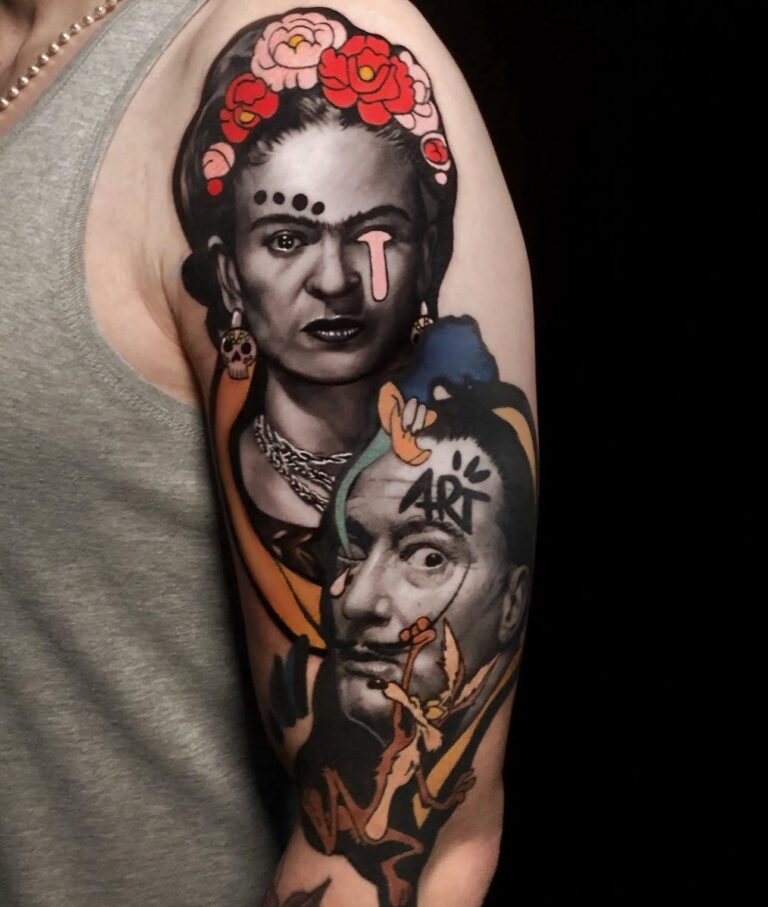
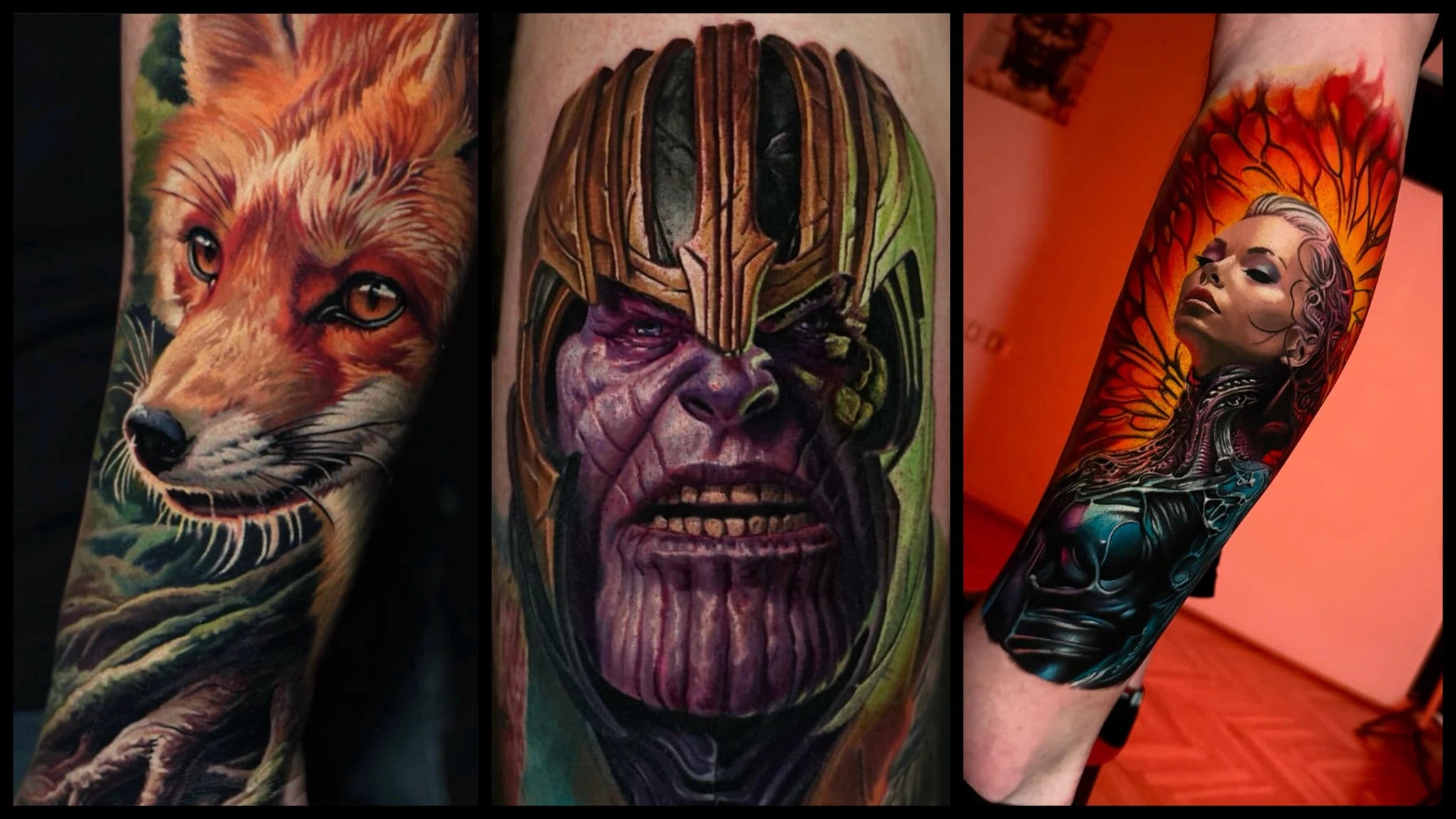
Realism tattoos are among the most visually striking work in the industry. A portrait that looks like a photograph. A flower with petals you could almost touch. A landscape that seems to have depth and light. Done well, realism is genuinely breathtaking.
But realism is also one of the most demanding styles to execute — and one of the most unforgiving when something goes wrong. If you’re considering a realism piece, understanding what makes it last will help you make better decisions about where you go and who you trust with your skin.
It Starts With the Artist
Not every tattoo artist should be doing realism. That’s not a criticism — it’s just the truth. Realism requires a very specific set of skills: the ability to read light and shadow, to build depth through layering, to work with precision across large areas of skin without losing consistency.
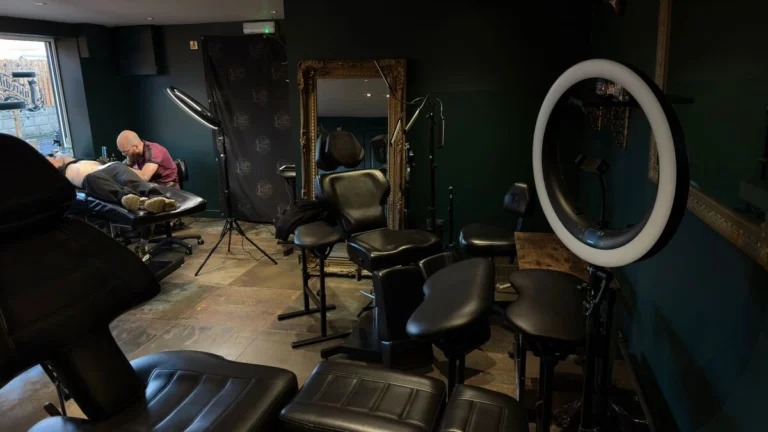
An artist who excels at traditional or neo-traditional work might be outstanding in their own style but completely out of their depth with a photorealistic portrait. This is why, at Inkredible Tattoo Studio in Sheffield, we work with specialist artists — people whose focus and portfolio is built around realism specifically. When you book a realism piece, you’re booking someone who has spent years developing that skill set and nothing else.
Look at an artist’s healed work, not just their fresh pieces. Fresh tattoos always look sharp. Healed work tells you the real story.
Skin Is Not a Canvas
One of the biggest misconceptions people have about realism tattoos is that skin behaves like paper or a screen. It doesn’t. Skin is a living surface. It stretches, ages, holds ink differently depending on the person, the body part, and even the time of year.
Ink doesn’t sit on top of skin — it goes into it. And once it’s in the dermis, it starts to interact with your body in ways that affect how the tattoo looks over time. Fine lines can spread slightly. Light areas can lose contrast. Colours can shift.
A skilled realism artist knows this and plans for it. They build the piece with longevity in mind — using the right needle configurations, the right ink densities, and the right techniques for different areas of the body. A portrait on a thigh behaves differently to one on a forearm. Experience teaches you how to compensate for that.
Ink Quality Is Non-Negotiable
Not all tattoo ink is equal. High-end studios use professional-grade inks that are consistent, stable, and tested for longevity. Cheaper inks can fade unevenly, shift in colour, or break down in ways that affect the integrity of the piece over time.
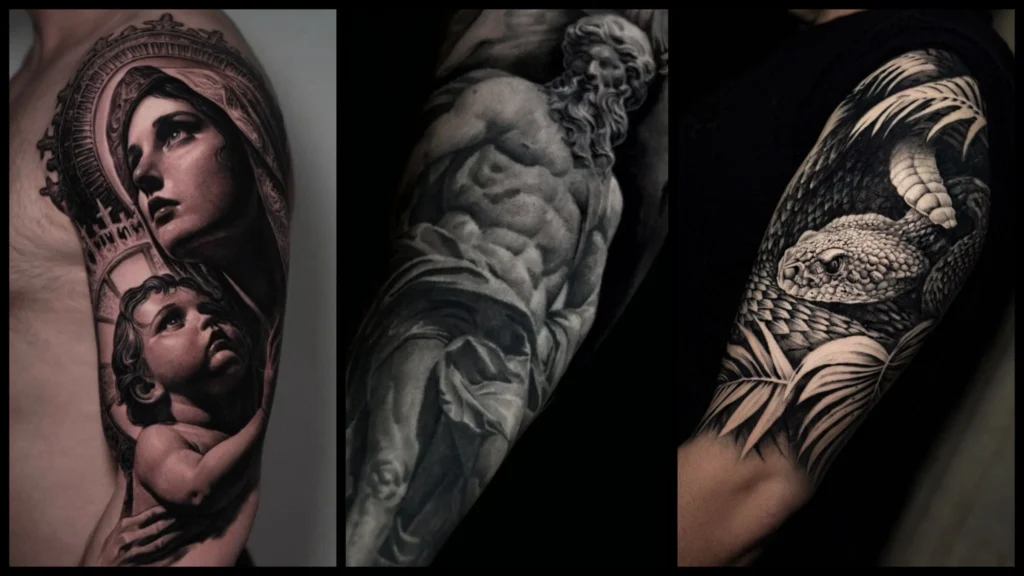
For realism specifically, the grey wash — the range of diluted black ink used to build shadow and depth — is particularly important. The ability to achieve smooth, even gradients depends on the quality and consistency of the ink as much as it does on the artist’s hand.
This is one of the areas where cutting corners shows. A realism piece done with inferior ink may look acceptable when fresh but age poorly, losing the contrast and detail that made it striking in the first place.
Aftercare Is Part of the Process
Even the best realism tattoo in the world can be compromised by poor aftercare. The healing phase is when the ink settles into the skin, and what you do during that period directly affects the final result.
Keep it clean, keep it moisturised, stay out of the sun, and don’t pick. These aren’t just general guidelines — for a detailed realism piece, they’re essential. Sun exposure in particular is one of the fastest ways to degrade a realism tattoo. UV breaks down ink over time, flattening contrast and washing out detail.
Once healed, use SPF on any tattooed skin that gets regular sun exposure. It’s a simple habit that makes a significant difference over the years.
Touch-Ups Are Normal
Even with the best artist, the best ink, and perfect aftercare, realism tattoos sometimes need a touch-up after healing. Skin is unpredictable. A small area might heal lighter than expected, or a detail might need reinforcing.
This is completely normal and not a sign that something went wrong. A good studio will offer a touch-up session as part of the process — it’s just finishing the work properly.
Thinking About a Realism Piece?
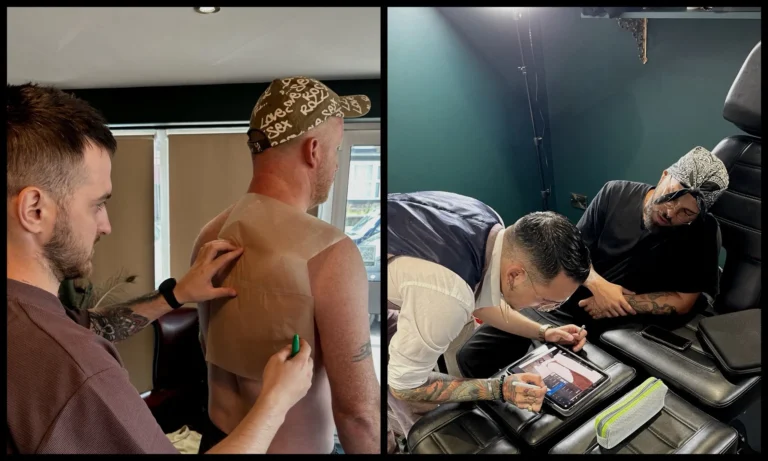
If you’re based in Sheffield and you’re ready to invest in a serious realism tattoo, the starting point is a consultation with the right artist. At Inkredible Tattoo Studio, our realism specialists work on portraits, botanicals, animals, landscapes, and everything in between.
Come in, bring your reference, and let’s talk about what’s possible.